|
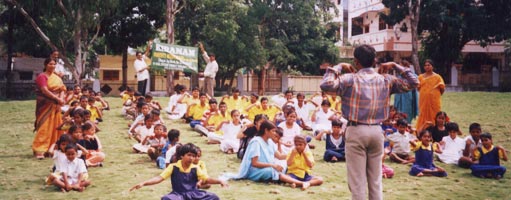
Kiranam special school for Disabled
The 1991 round of the sample survey conducted by the National sample survey organization estimated that people with visual, communication and loco motor disabilities number at least 14.56 million, or 1.9% of the total population of India. This figure covers only people who are "profoundly disabled", and does not include those with moderate to mild disabilities, who could, with a little effort, be integrated into efforts for rural development. Also not included in this figure are people with mental disabilities, and those affected by leprosy and deteriorating neuro-muscular conditions (e.g., muscular dystrophy, motor neuron disease, Parkinson's disease and senile dementia). A separate sample survey of mental retardation estimated that 3% of all children aged 0 to 14 are developmentally delayed. However, this figure once again excluded children with learning disabilities (e.g. dyslexia), or those referred to as slow learners. Again, about 5% to 10% of the general population of India is estimated to suffer from mental disorders of varying types and degrees of severity. Village level surveys in different parts of the country indicate that 4% - 10% of the population is persons with disabilities.
Causes of Disability
In India, as in other developing countries, the major causes of disability are malnutrition, communicable diseases, and infections in early childhood and accidents at home and at work. Nutritional deficiencies, inadequate sanitation, insufficient or inaccessible health care services, accidents and injuries from poorly designed equipment and implements, and practices like consanguineous marriages, have all contributed to a high prevalence of disabilities. Immunization programmes have not yet achieved 100% coverage, due partly to inadequate infrastructure, logistical problems and difficulties in maintaining the cold chain, and partly to the lack of public education on the subject. It has been estimated that an effective primary health programme can prevent about half of all disabilities. Early detection of impairment, combined with early and effective curative care can make a significant impact in minimizing or compensating for impairment and its consequences.
Several eminent personalities in the locality visited our Institute and made valuable suggestions for the development of a special school for disabled so that the mental handicaps and physical handicaps in the area will be benefited and their problems eased.
Nearly 75% of persons with intellectual disabilities are within the IQ 50 to 100 categories, and are only mildly to moderately disabled. They can achieve a degree of independence in self-care, learn to relate with other members of their community in socially acceptable ways, and can earn a living in supported employment. For example, they can be employed in various household tasks, or in animal husbandry, horticulture or repetitive non-farm jobs which non-disabled people may have little patience for. Despite this, however, their potential for contributing to their families and communities is little understood. Opportunities for their development are usually not available at those stages when they are most eager to learn and most in need of structured programmes for growth. Next page
Special School for Disabled (Mentally & Others)
|
S.No. |
Year |
Early
Inter
ven
tion |
Care Group |
Pre-Primary |
Pre-Secondary |
Pre-Vocational |
Home-Based |
Total |
|
1 |
1993-94 |
|
|
2 |
4 |
3 |
- |
9 |
|
2 |
1994-95 |
|
|
4 |
8 |
10 |
5 |
27 |
|
3 |
1995-96 |
|
|
6 |
12 |
13 |
7 |
38 |
|
4 |
1996-97 |
|
|
6 |
10 |
8 |
15 |
39 |
|
5 |
1997-98 |
|
|
8 |
9 |
25 |
22 |
64 |
|
6 |
1998-99 |
|
|
11 |
9 |
19 |
22 |
61 |
|
7 |
1999-00 |
|
|
10 |
11 |
16 |
22 |
59 |
|
8 |
2000-01 |
|
|
10 |
12 |
16 |
22 |
60 |
|
9 |
2001-02 |
|
|
10 |
12 |
16 |
22 |
60 |
|
10 |
2002-03 |
3 |
8 |
10 |
12 |
18 |
22 |
73 |
|
11 |
2003-04 |
8 |
10 |
10 |
12 |
20 |
23 |
76 |
|
12 |
2004-05 |
5 |
10 |
10 |
14 |
21 |
25 |
85 |
|
13 |
2005-06 |
5 |
9 |
10 |
12 |
20 |
25 |
81 |
|
14 |
2006-07 |
10 |
10 |
18 |
12 |
20 |
25 |
95 |
|
15 |
2007-08 |
8 |
18 |
14 |
18 |
20 |
25 |
103 |
|